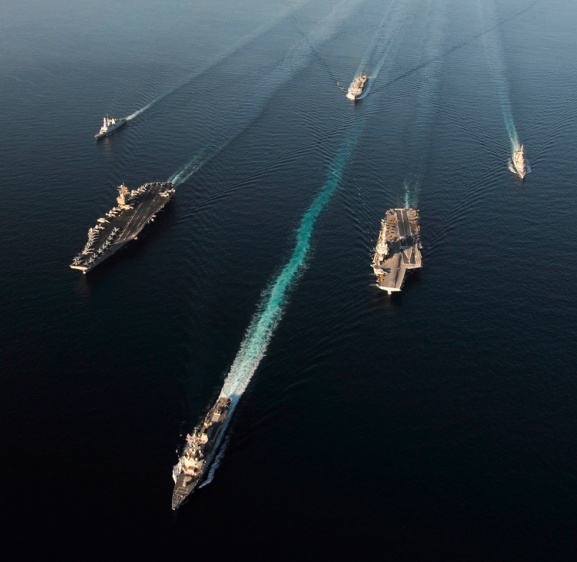
Compared to first-rank fleets, composed of heavily armed vessels designed for high-intensity combat, second-rank fleets consist of platforms such as patrol vessels and corvettes. These units are primarily dedicated to presence and surveillance missions. They have more limited combat capabilities and operate mainly in littoral environments or in contexts of low to medium intensity.
The term “light naval units” can be preferred in order to avoid the pejorative connotation associated with “second rank.” However, this terminology reflects a real capability hierarchy: the needs of these units are generally addressed after those of heavily armed vessels.
This positioning contrasts with the reality of their operational use. Light naval units continuously ensure the protection of state interests at sea, particularly in littoral areas characterized by a high density and diversity of actors. Their operational environment is complex, combining civilian, governmental, and military stakeholders within the same maritime space.
Their range of missions is extensive. They conduct persistent presence and surveillance tasks, while maintaining the ability to rapidly transition to intervention operations. These include countering illegal migration, pollution control, counter-narcotics operations, and the fight against illegal fishing. These missions require agility, responsiveness, and constant situational awareness.
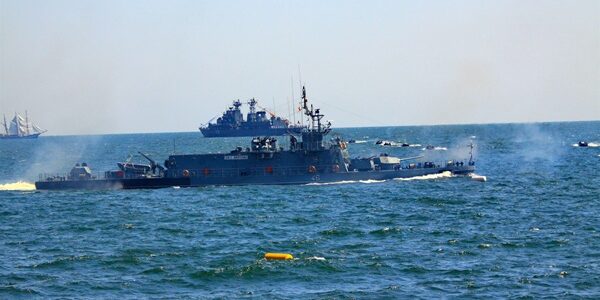
In contested areas, light naval units also contribute to deterrence against low-intensity destabilization actions. They may be deployed on the front line to assert state authority in response to hybrid threats[1]. In some cases, they can even face, in asymmetrical conditions, higher-end combat units such as frigates or destroyers belonging to competing powers.[2] This reality highlights the operational exposure of these platforms.
Second-rank fleets therefore operate on the front line in demanding environments, where the ability to master and share information is a decisive factor for mission success. As such, they must now undergo their own digital transformation by leveraging currently available cloud-based technologies. Operational superiority is no longer based solely on firepower: the level of digitization has become a factor of power comparable to weapon caliber. In this context, digitization constitutes a structural lever for light naval units.
1. A lag in the digitization of light naval units
Naval forces have historically been pioneers in the integration of digital technologies. From the early introduction of radar systems, they developed integrated chains linking detection to action. These systems rely on data fusion within Combat Management Systems (CMS) and on the sharing of information through tactical data links. First-rank vessels now benefit from highly advanced and mature systems.
However, this dynamic has only partially extended to the rest of the fleet. Light naval units generally have digital navigation systems but are less frequently equipped with fully integrated mission management systems. When such systems exist, they often suffer from limitations in terms of interoperability, particularly with partner navies or other maritime agencies involved in state action at sea.
This situation contrasts with the trajectory followed by land forces. Although digitized later, land forces have undergone a progressive but extensive transformation, deploying digital capabilities down to the level of individual soldiers. Their systems now integrate planning, execution, and tactical situation sharing in a unified framework, even in environments with degraded connectivity.
As a result, light naval units are now characterized by a relative lag in digitization.
2. Persistent digital fragmentation
In littoral environments, light naval units operate within a context marked by multiple informational discontinuities that limit their effectiveness. These fractures are not only technical but also organizational and doctrinal in nature.
- The first fracture reflects the transposition of geography. There is a clear information gap between land-based maritime surveillance system used for coastal monitoring and security and onboard systems deployed at sea. This separation prevents the establishment of a continuous detection-to-decision chain, even though littoral operations require seamless information exchange between shore and sea.
- The second fracture concerns segmentation within the surface fleet. Historically justified by differing capability requirements, this distinction is becoming increasingly obsolete.[3] A patrol vessel must now be able to fully contribute to the overall situational awareness and benefit from it. Beyond operational considerations, this alignment is also a human resource issue: consistency in tools and procedures across the whole fleet reduces training requirements and facilitates crew mobility.
- The third level of fragmentation is institutional. Maritime operations involve a wide range of actors (navies, maritime authorities, customs, coast guards, police forces) whose information systems remain largely heterogeneous and poorly interoperable. This lack of digital continuity slows down decision-making processes and limits the ability to understand inherently inter-agency situations in a comprehensive manner.
Taken together, these fractures hinder the emergence of a true maritime information continuum and significantly constrain the benefits that digitization could bring to light naval units.
3. A necessary doctrinal evolution
The limitations observed are not solely technological. They are rooted in the organization of responsibilities among maritime actors.[4] Each administration develops and operates its own systems in line with its mission scope. This structure results in an implicit logic of information retention: data sharing occurs only when a specific and justified need is identified.
Furthermore, data is often perceived as a source of value or even power, reinforcing reluctance to share it. This approach has now reached its limits.
The operational value of information increasingly depends on its ability to be cross-referenced and enriched. The combination of multiple datasets allows the identification of weak signals, correlations, or anomalies that would remain invisible in isolated systems. Moreover, the same piece of data can have different operational meanings depending on the actor analyzing it.
In this context, value no longer lies in data ownership, but in its circulation and interpretation.
This evolution is now made possible by emerging technologies such as Data-Centric Security, which allow data to be widely shared while ensuring that only authorized users can access it.
4. Specific constraints of digitizing light naval units
Digitizing light naval units cannot be approached as a simple adaptation of solutions developed for first-rank vessels. It must account for specific constraints that directly shape architectural choices and integration approaches.
- The first constraint is structural heterogeneity.
The diversity of platforms is accompanied by strict constraints in terms of volume, energy consumption, and cost.[5] These limitations significantly reduce integration margins and require careful technical trade-offs.
- The second constraint is security.
Light naval units are less protected than major combatants and therefore more exposed to both physical and cyber intrusions. Their digital architecture must incorporate robust security mechanisms while remaining compatible with operational requirements.
- The third constraint is usability.
Crews are smaller and less specialized, which requires systems that minimize onboard administration and offer intuitive interfaces that can be quickly mastered.
- Finally, connectivity is inherently constrained and intermittent at sea.
Digital architectures must therefore support degraded or disconnected modes of operation, ensuring local data processing and operational continuity without constant reliance on shore-based systems.
5. An immediately achievable technological leap
The adoption of digital technologies within naval forces does not follow a linear trajectory. Historically, innovation has flowed from high-end platforms to the rest of the fleet. Today, this model is being partially reversed.
Light naval units provide a favorable environment for the rapid integration of new technologies, particularly software-based capabilities. Less constrained by legacy systems and long upgrade cycles, they can adopt innovations such as data analytics, artificial intelligence, and agent-based approaches more easily.
Paradoxically, the simplest platforms may be the most capable of capturing technological disruptions. This opens the possibility of a leap in capabilities, where light naval units become not just recipients but drivers of innovation.
6. Available technologies
Cloud-based technologies now enable the digitization of light naval units at a level compatible with their constraints. Distributed architectures allow advanced capabilities to be deployed on low-footprint infrastructures. Edge computing enables onboard data processing, ensuring operational autonomy while reducing reliance on connectivity.
This transformation is accompanied by a growing decoupling between hardware and software. Capabilities can now be deployed progressively, updated continuously, and tailored to mission needs through modular architectures based on microservices.
Interoperability standards, both civilian and military, have reached sufficient maturity to enable seamless integration between heterogeneous systems. Open data buses, standardized formats, and APIs support the decoupling of data producers and consumers, facilitating the integration of new data sources and advanced decision-support algorithms.
Compatibility with tactical data links, particularly Link 16 JREAP, is a key enabler of extended connectivity beyond line of sight.
These architectures also rely on connectivity abstraction, ensuring operational continuity through store-and-forward mechanisms and degraded-mode operations. Security is a central concern and must be integrated from the design stage, notably through Data-Centric Security approaches.
7. Raising the level of digital ambition
Digitization must focus on enhancing system intelligence. The production of a common tactical picture is no longer an objective in itself but a baseline capability.
Decision-making at sea is inherently constrained by incomplete information, environmental uncertainty, and time pressure. In this context, data-driven technologies must help objectify uncertainty and support decision-makers.
Several levels of support can be combined:
- Data visualization enables the effective exploitation of large volumes of information through appropriate representations (heat maps, statistical views).
- Domain-specific algorithms, derived from operational experience, provide an initial structuring of the analysis.
- In parallel, artificial intelligence approaches can be leveraged from the outset to process the same data, in order to identify more complex correlations and detect atypical situations.
These capabilities should not be viewed as sequential steps but as integrated components of a coherent system.
8. The future of naval digitization
Two major trends will shape the future.
- The rise of agent-based architectures. Cloud infrastructures will remain the backbone, but artificial intelligence will increasingly act as the interface. Conversational interfaces will allow users to interact with systems through intelligent agents capable of orchestrating services.
- The growing hybridization between manned and unmanned systems. The integration of drones extends operational reach while reducing risk exposure. The objective is not to replace crews but to develop hybrid architectures combining onboard autonomy, remote supervision, and human decision-making.
On light naval units, the integration of drones must remain economically sustainable and therefore enable simple, lightweight interoperability between C2 systems and drone control systems, regardless of their type.
Light naval units must no longer be seen as late adopters of digital transformation, but as catalysts. Their agility and operational constraints make them ideal platforms for experimentation.
They could ultimately become advanced laboratories for the digitization of naval warfare.